Unlock Exponential Growth: How an AI Workforce Can Scale Your Business
In today's fast-paced business landscape, the ability to scale rapidly and efficiently is no longer a luxury—it's a necessity. Traditional growth models often hit bottlenecks, whether it's talent acquisition, operational costs, or geographical limitations. This is where an AI workforce emerges as a game-changer. By leveraging intelligent automation and advanced algorithms, businesses can transcend conventional barriers, paving the way for unprecedented expansion and innovation.
An AI workforce allows companies to grow business with AI workforce capabilities, automating complex tasks, providing data-driven insights, and freeing human employees to focus on strategic initiatives. This isn't about replacing human talent, but augmenting it, creating a synergistic environment where AI agents handle repetitive, data-intensive, or scalable tasks, allowing your core team to innovate and lead.
The Modern Business Imperative: Scaling with AI
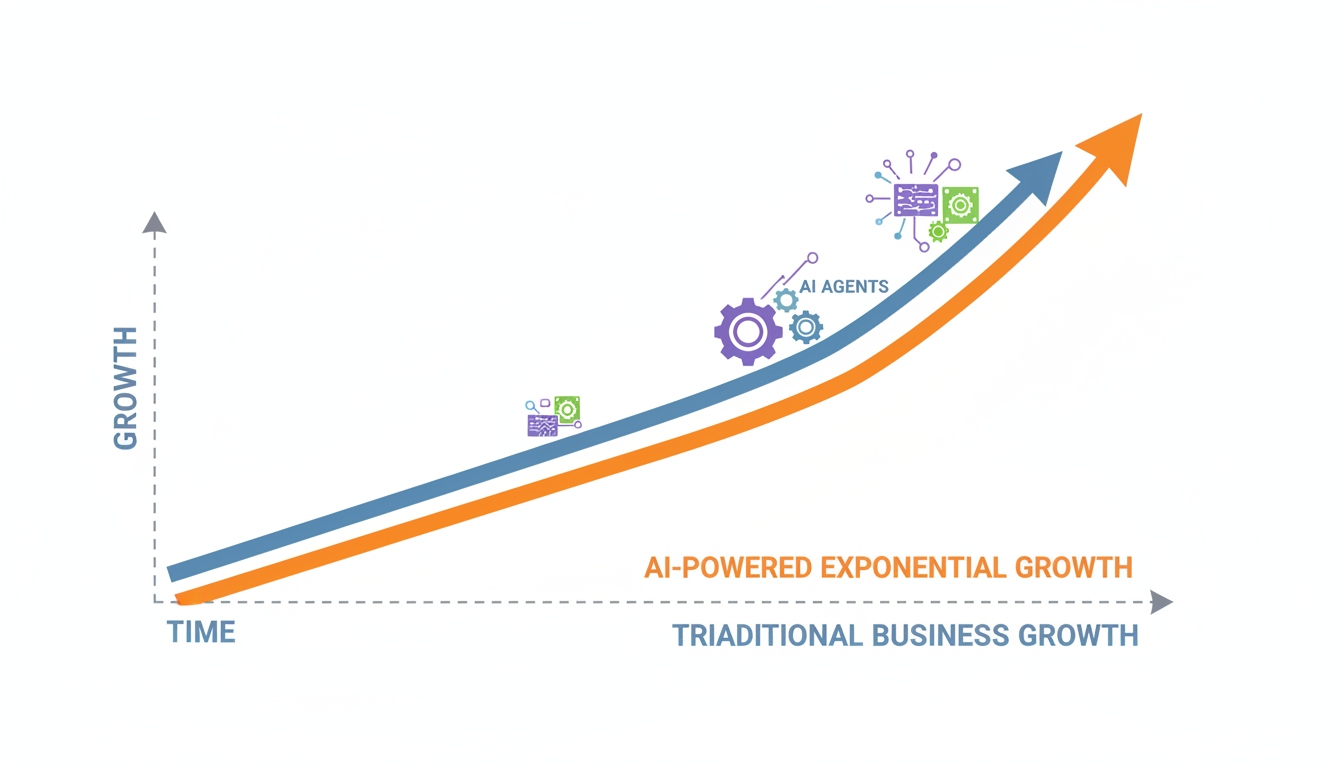
The quest for sustainable growth is a constant for every business. However, traditional scaling methods—hiring more people, expanding infrastructure, increasing overhead—often lead to diminishing returns and operational complexities. The answer lies in smart, scalable solutions that don't linearly increase costs with output.
Scaling with AI introduces a new paradigm. Imagine a team that works 24/7, processes vast amounts of data in seconds, and learns from every interaction without requiring breaks or benefits. This is the promise of an AI workforce. It provides the agility and computational power necessary to adapt to market demands, personalize customer experiences, and optimize internal processes at a scale previously unimaginable.
Key advantages of scaling with AI include:
- Unconstrained Capacity: AI agents can be replicated and deployed instantly, handling peaks in demand without stress.
- Cost Efficiency: Significantly reduces labor costs associated with repetitive tasks and training.
- Enhanced Speed & Accuracy: Executes operations faster and with fewer errors than human teams.
- Global Reach: Operates across different time zones and languages without geographical limitations.
Defining Your AI Workforce: Roles and Responsibilities
When we talk about an 'AI workforce,' we're not just referring to basic automation scripts or simple chatbots. We're discussing sophisticated, autonomous agents capable of performing complex functions, collaborating with each other, and interacting intelligently with human teams.
An AI workforce comprises specialized AI agents, each designed for particular roles. These roles are often defined by the tasks they perform and the data they process. They can operate independently or as part of a larger AI team, managed by an overarching AI system or human oversight. Understanding these roles is crucial to effectively deploying an AI workforce for business growth.
Common roles an AI workforce can fill include:
- Data Analysts: Processing and interpreting large datasets to identify trends and inform decisions.
- Content Generators: Drafting marketing copy, reports, and internal communications.
- Customer Support Agents: Handling inquiries, resolving common issues, and escalating complex cases.
- Operations Optimizers: Monitoring workflows, predicting potential bottlenecks, and suggesting improvements.
- Research Assistants: Sifting through vast repositories of information to compile reports or identify new opportunities.
- Personalized Marketing Specialists: Tailoring campaigns and recommendations based on individual customer behavior.
Key Areas Where AI Workforce Drives Growth
The impact of an AI workforce reverberates across virtually every department of a business, unlocking new avenues for efficiency and growth. From foundational research to direct customer engagement, AI agents can amplify human capabilities and deliver tangible results.
Research & Development (R&D)
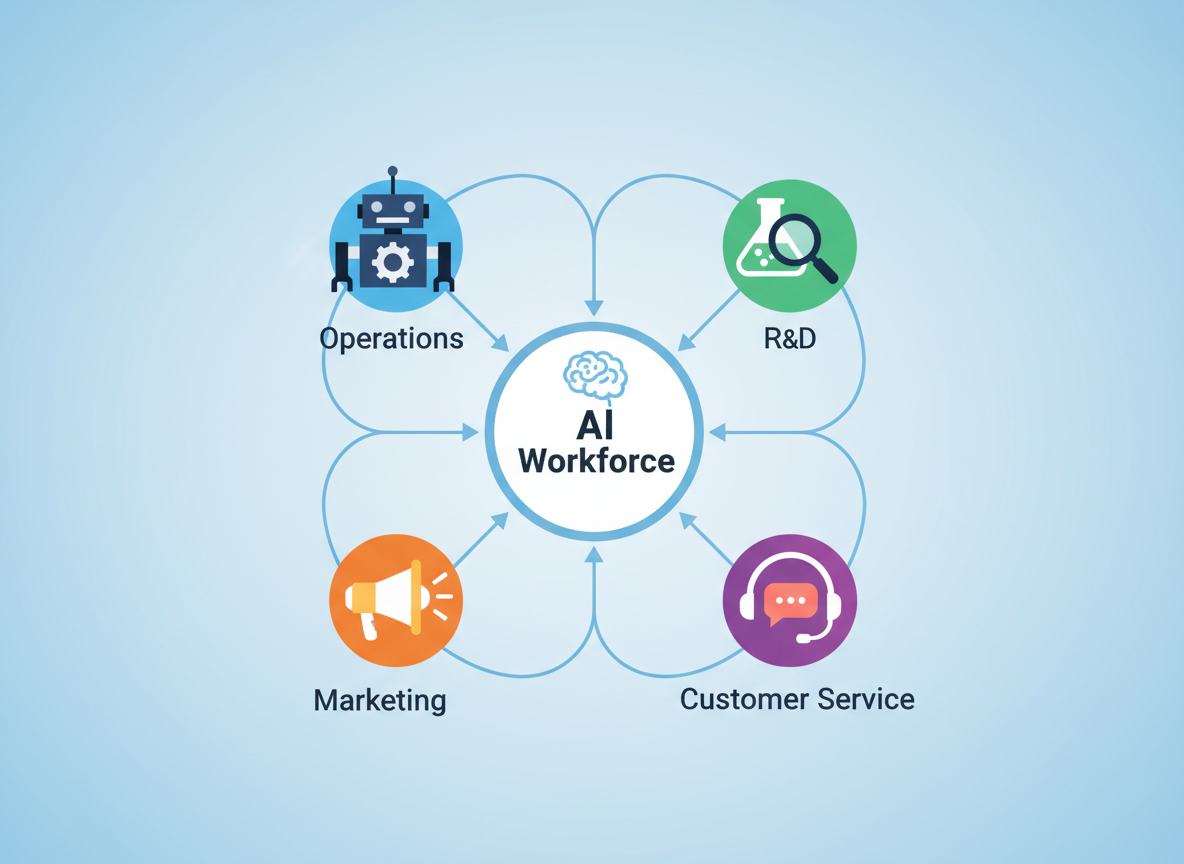
In R&D, AI agents can drastically accelerate innovation cycles. They can analyze vast scientific literature, simulate complex experiments, predict material properties, and even design new product concepts. This allows companies to bring new products and services to market faster, gaining a significant competitive edge. Imagine an AI team constantly scanning global patents and research papers, identifying emerging trends and potential breakthroughs.
Operations & Efficiency
Operational efficiency is a cornerstone of profitable growth. AI workforces can optimize supply chains, predict equipment maintenance needs, manage inventory dynamically, and automate routine administrative tasks. This reduces waste, minimizes downtime, and ensures smoother, more reliable operations. The result is lower operational costs and higher output quality, directly contributing to the AI workforce benefits for your bottom line.
Download: The Ultimate Guide to Building Your AI Workforce
Ready to unlock exponential growth? Get our comprehensive guide to defining AI roles, overcoming implementation challenges, and scaling your business with AI agents. Learn practical strategies to integrate AI into your operations.
Marketing & Sales
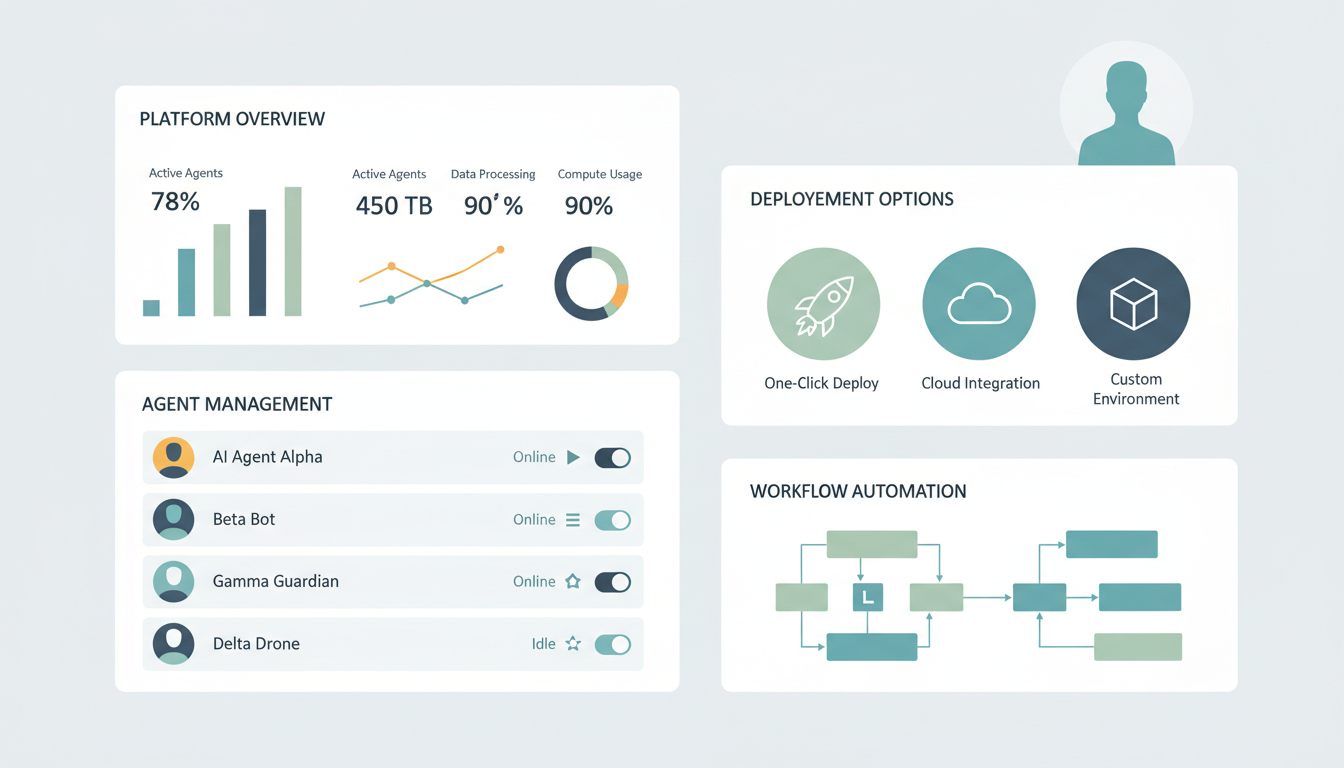
For marketing and sales teams, AI agents can provide hyper-personalization at scale. They can analyze customer data to identify ideal target audiences, craft highly relevant marketing messages, automate lead qualification, and even conduct initial sales outreach. This leads to higher conversion rates, more efficient ad spend, and a stronger customer acquisition engine.
Customer Service
An AI workforce can transform customer service by providing 24/7 support, instant answers to frequently asked questions, and personalized assistance. AI-powered chatbots and virtual assistants can handle a high volume of inquiries, escalating only complex cases to human agents. This not only improves customer satisfaction but also significantly reduces the workload on human support teams.
Case Studies: Businesses Thriving with AI Teams
Across various industries, forward-thinking companies are already leveraging AI workforces to achieve remarkable results. While specific company names may vary, the patterns of success are clear.
- E-commerce Giants: Utilize AI agents to personalize product recommendations, manage dynamic pricing, and automate customer support interactions, leading to increased sales and customer loyalty.
- Financial Institutions: Employ AI to detect fraud, analyze market trends for investment strategies, and automate compliance checks, enhancing security and decision-making speed.
- Healthcare Providers: Deploy AI assistants for administrative tasks, preliminary diagnosis support, and managing patient data securely, improving efficiency and patient care.
- Manufacturing Firms: Use AI for predictive maintenance of machinery, quality control, and optimizing production schedules, minimizing costly downtime and maximizing output.
These examples underscore how AI is not just a tool but a fundamental shift in how work gets done, enabling businesses to grow business with AI workforce solutions across the board.
Overcoming Implementation Challenges
Adopting an AI workforce, while transformative, isn't without its challenges. Common hurdles include data quality issues, integration complexities with existing systems, the need for specialized AI expertise, and managing the ethical implications of autonomous agents.
However, these challenges are increasingly being addressed by advanced platforms designed to simplify AI deployment. For instance, managing a sophisticated AI workforce typically requires robust infrastructure and technical know-how. This is where a managed platform solution becomes invaluable. Services like Clippa.me provide the managed environment to run your AI workforce, making exponential growth accessible without the burden of server overhead or complex infrastructure management.
By choosing a platform that abstracts away the technical complexities, businesses can:
- Reduce IT Burden: Eliminate the need for dedicated server maintenance and scaling.
- Streamline Deployment: Quickly set up and configure AI agents without extensive coding.
- Ensure Security & Compliance: Benefit from built-in security features and compliance frameworks.
- Focus on Strategy: Dedicate resources to defining AI roles and optimizing business outcomes, rather than technical upkeep.
Your Path to an AI-Powered Scalable Business
Building an AI-powered scalable business is a strategic journey that begins with understanding your needs and ends with continuous optimization. The future of business growth is undeniably linked to the intelligent deployment of AI.
Here’s a simplified path to integrate an AI workforce into your operations:
- Identify Key Bottlenecks: Pinpoint areas in your business where manual processes are slow, costly, or prone to errors. These are prime candidates for AI automation.
- Define AI Roles: Determine specific tasks and responsibilities that AI agents can effectively handle, ensuring they align with your growth objectives.
- Choose the Right Platform: Select a robust, managed platform that simplifies the deployment and management of your AI workforce. This is where solutions like Clippa.me shine, offering an accessible way to run a full company using AI agents without server overhead.
- Start Small, Scale Gradually: Begin with pilot projects in low-risk areas to build confidence and refine your AI strategy. As you see results, expand your AI workforce to other departments.
- Monitor and Optimize: Continuously track the performance of your AI agents, gathering data to identify areas for improvement and further optimization.
- Integrate Human & AI Teams: Foster collaboration between your human employees and AI workforce, leveraging the strengths of each to create a powerful, symbiotic ecosystem.
Frequently Asked Questions About AI Workforces
Q: What exactly is an AI workforce?
An AI workforce refers to a collection of autonomous or semi-autonomous AI agents designed to perform specific tasks, collaborate, and contribute to business operations, much like a human team, but with enhanced speed, scalability, and data processing capabilities.
Q: How is an AI workforce different from traditional automation?
While traditional automation (like RPA) follows pre-programmed rules, an AI workforce leverages machine learning and advanced AI to adapt, learn from data, make decisions, and often perform more complex, cognitive tasks, making them more dynamic and intelligent.
Q: Will an AI workforce replace all human jobs?
The prevailing view is that an AI workforce will augment human capabilities rather than fully replace them. AI takes over repetitive, data-heavy, or dangerous tasks, allowing human employees to focus on creative problem-solving, strategic thinking, and interpersonal interactions, ultimately leading to higher-value work.
The era of the AI workforce is not a distant future; it's here. Businesses that embrace this technological shift will not only overcome traditional scaling challenges but will also unlock unprecedented opportunities for innovation, efficiency, and market leadership. By carefully defining roles, strategically implementing AI, and leveraging powerful platforms, you can effectively grow business with AI workforce capabilities, transforming your potential from linear to exponential. The journey to an AI-powered scalable business starts now.