The Future of Work: How AI Workforces Are Revolutionizing Every Industry with Clippa.me
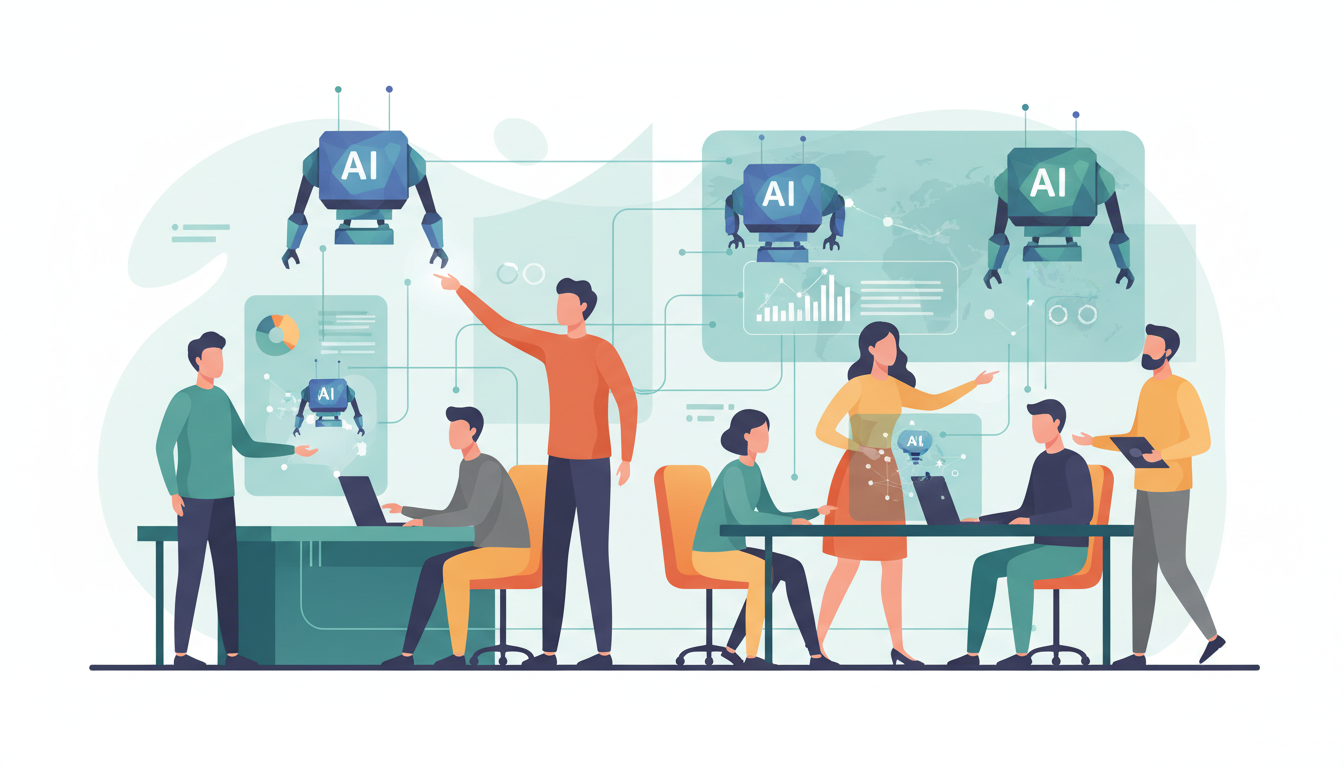
The landscape of work is undergoing an unprecedented transformation, driven by the rapid advancements in Artificial Intelligence. What was once the realm of science fiction — autonomous systems working alongside or even independently of humans — is now becoming a tangible reality. We are witnessing the emergence of AI workforces, intelligent agents and automated systems that are not just tools, but active, contributing members of an organization. This shift isn't just about automation; it's about a fundamental redefinition of productivity, collaboration, and value creation.
At its core, an AI workforce refers to a collection of AI-powered agents, bots, or systems designed to perform specific tasks, processes, or even complex decision-making, often working in concert with human teams. These digital counterparts are revolutionizing every industry by taking on repetitive, data-intensive, or even creative tasks, freeing human talent to focus on higher-level strategy, innovation, and empathy-driven work. This blog post explores how AI workforces are reshaping industries, the strategies for their effective integration, and how platforms like Clippa.me are making this future accessible today.
The Emergence of AI as a Core Workforce Component
The idea of machines doing human work is not new, but the sophistication and capabilities of today's AI are. We're moving beyond simple automation to a point where AI can learn, adapt, and even initiate actions, making it an indispensable part of modern business operations. This evolution marks a significant milestone in the future of work AI, where artificial intelligence transitions from a supporting tool to a core component of the workforce itself.
Defining the AI Workforce
An AI workforce is more than just a collection of algorithms; it's a dynamic ecosystem of intelligent systems designed to execute tasks autonomously or semi-autonomously. These can range from Robotic Process Automation (RPA) bots handling data entry to sophisticated AI agents managing customer service interactions, analyzing complex datasets, or even generating creative content. They possess capabilities like natural language understanding, machine learning, and predictive analytics, allowing them to perform tasks that once required significant human intervention.
Crucially, an AI workforce isn't about replacing humans wholesale. Instead, it's about augmenting human capabilities, handling the high-volume or routine work, and providing insights that humans might miss. This collaboration enables a more efficient, scalable, and innovative operational model for businesses of all sizes.
From Automation to Autonomy: The Evolution of AI in Business
The journey of AI in business has been one of continuous advancement. Initially, AI tools focused on basic automation, streamlining repetitive tasks like data extraction or report generation. This phase was about efficiency gains through pre-programmed rules. The next wave introduced machine learning, allowing systems to learn from data and improve performance over time, moving into areas like predictive analytics and personalized recommendations.
Today, we're witnessing the rise of autonomous AI agents capable of making decisions, adapting to new situations, and even orchestrating complex workflows without constant human oversight. This shift from automation to autonomy is foundational to the concept of an AI workforce. These agents can proactively identify problems, propose solutions, and execute tasks, transforming how entire departments operate. This evolution empowers businesses to achieve unprecedented levels of agility and responsiveness.
The Economic Imperative: Why Businesses Are Adopting AI Workforces
The adoption of AI workforces is driven by a compelling economic imperative. Businesses are under constant pressure to increase efficiency, reduce costs, and accelerate innovation. AI workforces offer a powerful solution by operating 24/7, eliminating human error in repetitive tasks, and processing vast amounts of data at speeds impossible for humans. This leads to significant operational savings and enhanced productivity.
Furthermore, AI enables scalability. Companies can rapidly expand their operational capacity without proportional increases in human headcount, allowing them to respond quickly to market demands or growth opportunities. The insights derived from AI's analytical capabilities also drive better strategic decisions, leading to competitive advantages and new revenue streams. In a rapidly evolving global market, leveraging an AI workforce is becoming less of an option and more of a necessity for sustained success.
Industry-Specific Impacts of AI Workforces
The transformative power of AI workforces is not confined to a single sector; it's a cross-industry phenomenon. From optimizing supply chains to personalizing customer experiences, AI is creating bespoke solutions that address unique industry challenges and opportunities. This widespread impact underscores the versatility and adaptability of AI team strategy across diverse economic landscapes.
Manufacturing & Logistics: Precision and Efficiency at Scale
In manufacturing, AI workforces are driving the next industrial revolution. AI-powered robots are performing intricate assembly tasks with unparalleled precision, reducing defects and increasing production speed. Predictive maintenance AI agents analyze sensor data from machinery to anticipate failures, allowing for proactive repairs and minimizing costly downtime. In logistics, AI optimizes complex supply chains, managing inventory, routing deliveries, and predicting demand fluctuations. This results in significant cost savings, faster time-to-market, and greater resilience against disruptions.
Healthcare & Pharma: Personalized Care and Accelerated Discovery
AI workforces are revolutionizing healthcare by assisting with diagnostics, personalizing treatment plans, and streamlining administrative tasks. AI agents can analyze medical images for subtle anomalies, help clinicians identify potential diseases earlier, and monitor patient health remotely. In pharmaceuticals, AI accelerates drug discovery by sifting through vast chemical databases to identify promising compounds, simulate molecular interactions, and optimize clinical trials. This leads to faster development of life-saving treatments and more efficient healthcare delivery, improving patient outcomes globally.
Financial Services: Risk Management and Customer Experience
The financial sector leverages AI workforces for fraud detection, algorithmic trading, and enhanced customer service. AI agents monitor transactions in real-time to identify suspicious patterns, significantly reducing financial crime. They also execute complex trades at speeds beyond human capability, capitalizing on market opportunities. For customers, AI-powered chatbots provide instant support, answer queries, and offer personalized financial advice, improving engagement and satisfaction. This not only bolsters security but also elevates the overall customer experience.
Retail & E-commerce: Hyper-personalization and Supply Chain Optimization
AI workforces are redefining retail by enabling hyper-personalized shopping experiences. AI agents analyze purchasing history, browsing behavior, and demographic data to recommend products, create custom offers, and predict future trends. On the operational side, AI optimizes inventory management, predicting demand for specific products and ensuring shelves are always stocked. It also streamlines supply chains, from warehouse automation to last-mile delivery, leading to reduced waste, lower costs, and increased customer satisfaction. This intelligent approach makes shopping more intuitive and efficient for consumers.
Creative Industries: Amplifying Human Ingenuity
Even in fields traditionally considered exclusively human, AI workforces are making their mark. In content creation, AI agents can generate draft articles, marketing copy, and even musical compositions, freeing human creatives to focus on refining, strategizing, and adding unique artistic flair. In design, AI can rapidly iterate on visual concepts, analyze audience preferences, and automate tedious editing tasks. This collaboration between human ingenuity and AI efficiency amplifies creative output, pushes boundaries, and allows for greater exploration of artistic possibilities.
Strategies for Integrating AI into Human Teams
Successful AI workforce management isn't just about deploying technology; it's about strategically weaving AI into the fabric of existing human teams. This requires thoughtful planning, clear communication, and a focus on fostering collaboration rather than replacement. Effective integration maximizes the strengths of both human and artificial intelligence, leading to a synergistic work environment.
Identifying AI-Suitable Roles and Tasks
The first step in integrating an AI workforce is to meticulously identify which roles and tasks are best suited for AI. This involves auditing current processes to pinpoint repetitive, data-intensive, rule-based, or high-volume activities that could be automated or augmented by AI. Tasks requiring creativity, emotional intelligence, complex ethical judgment, or nuanced human interaction are generally best left to human professionals.
By focusing on tasks that AI excels at, organizations can free up human employees from mundane work, allowing them to concentrate on strategic initiatives, innovation, and client relationships. This targeted approach ensures that AI is applied where it delivers the most value and complements human capabilities most effectively.
Designing Hybrid Human-AI Workflows
The most effective approach to the future of work AI involves designing integrated workflows where humans and AI agents collaborate seamlessly. This means creating processes where AI handles the data processing, analysis, or initial draft creation, then hands off to a human for refinement, strategic input, or final decision-making. Conversely, humans might initiate tasks or set parameters for AI to execute.
Developing clear handoff points, communication protocols, and oversight mechanisms is crucial. Tools that facilitate this human-AI collaboration, such as shared dashboards and real-time alerts, are essential for ensuring smooth operations. The goal is to create a symbiotic relationship where each entity enhances the other's performance, leading to optimized outcomes and increased overall productivity.
Training and Upskilling the Human Workforce
Introducing an AI workforce necessitates a proactive strategy for training and upskilling human employees. Fear of job displacement can be a significant barrier to adoption. Organizations must invest in programs that teach employees how to work with AI, rather than competing against it. This includes training on how to operate AI tools, interpret AI-generated insights, and manage AI agents.
Focus should be placed on developing uniquely human skills such as critical thinking, problem-solving, creativity, emotional intelligence, and complex communication. By transforming human roles into 'AI supervisors,' 'AI trainers,' or 'AI-enhanced analysts,' companies can empower their workforce to thrive in an AI-driven environment, fostering a culture of continuous learning and adaptation.
Establishing Governance and Ethical Guidelines
As AI workforces become more prevalent, establishing robust governance and ethical guidelines is paramount. This involves defining clear rules for AI's decision-making processes, ensuring transparency and accountability. Policies must address issues such as data privacy, algorithmic bias, and the responsible use of AI outputs.
Creating an internal ethics board or a dedicated AI governance committee can help oversee the deployment and monitoring of AI agents. These guidelines ensure that AI workforces operate within legal and ethical boundaries, building trust among employees, customers, and stakeholders. A proactive approach to AI ethics is critical for long-term success and mitigating potential risks associated with advanced AI deployment.
Overcoming Challenges in AI Workforce Adoption
While the benefits of an AI workforce are substantial, the path to full adoption is not without its hurdles. Organizations must be prepared to address a range of challenges, from technical complexities to ethical dilemmas and workforce adaptation. Proactive planning and strategic mitigation are key to successful AI transformation.
Data Privacy and Security Concerns
One of the most significant challenges in deploying an AI workforce involves managing data privacy and security. AI systems often require access to vast amounts of sensitive data to learn and perform their functions effectively. This raises concerns about how this data is collected, stored, processed, and protected from breaches or misuse. Organizations must implement stringent data governance frameworks, comply with regulations like GDPR or CCPA, and utilize advanced encryption and cybersecurity measures.
Ensuring that AI agents operate within secure environments and that data access is carefully controlled is crucial. Regular security audits and employee training on data handling best practices are also essential to mitigate risks and maintain trust.
Managing Ethical Implications and Bias
AI systems are only as unbiased as the data they are trained on and the humans who program them. This can lead to ethical concerns such as algorithmic bias, where AI decisions inadvertently discriminate against certain groups. Furthermore, the opaque nature of some advanced AI models (the 'black box' problem) can make it difficult to understand how decisions are reached, raising issues of accountability.
Addressing these ethical implications requires diverse development teams, rigorous testing for bias, and the implementation of explainable AI (XAI) techniques where possible. Organizations must commit to developing AI responsibly, prioritizing fairness, transparency, and accountability to build public and internal confidence in their AI workforce.
The Talent Gap: Building AI Competency
The rapid pace of AI development has created a significant talent gap. Many organizations struggle to find individuals with the specialized skills needed to build, deploy, manage, and maintain AI workforces. This includes AI engineers, data scientists, machine learning specialists, and AI ethicists. Moreover, existing employees often lack the skills to effectively collaborate with AI systems.
Closing this gap requires a multi-pronged approach: investing in internal training and upskilling programs, partnering with educational institutions, and actively recruiting AI talent. Fostering a culture of continuous learning and providing opportunities for employees to develop AI literacy are vital for ensuring the workforce can adapt to new tools and methodologies.
Ensuring Scalability and Interoperability
As AI workforces grow, ensuring their scalability and interoperability with existing systems becomes a complex challenge. Businesses need AI solutions that can expand to meet increasing demands without sacrificing performance or efficiency. Furthermore, AI agents must be able to communicate and integrate seamlessly with a multitude of legacy systems, cloud platforms, and other software applications.
This often requires robust API integrations, standardized data formats, and a flexible, modular AI architecture. Choosing platforms that prioritize scalability and offer broad compatibility is crucial for long-term success. Without these considerations, an AI workforce can quickly become fragmented and difficult to manage, hindering its overall effectiveness.
Building Your Future-Ready AI Team with Clippa.me Today
The vision of an AI-powered enterprise might seem daunting, but platforms like Clippa.me are making it an accessible reality for businesses of all sizes. Clippa.me is designed to be the central nervous system for your AI workforce management, enabling you to effortlessly build, deploy, and oversee your entire team of AI agents. We understand that running a full company using AI agents requires robust tools, and that's precisely what we offer.
Unlock the Full Potential of Your AI Workforce: Download Our Exclusive Guide!
Ready to strategically integrate AI into your business? Get our in-depth guide on 'Building and Managing a High-Performance AI Team' to navigate the future of work, optimize operations, and achieve unparalleled growth. Learn best practices for AI adoption, ethical considerations, and real-world impl
Streamlined AI Agent Creation and Management
Clippa.me simplifies the complex process of creating sophisticated AI agents. Our intuitive interface allows you to define roles, assign tasks, and configure behaviors for your AI team members without needing extensive coding knowledge. Whether you need a customer service bot, a data analyst agent, or a creative content generator, Clippa.me provides the tools to bring your AI agents to life quickly. You can easily modify, update, and manage your agents from a single dashboard, ensuring your AI workforce always aligns with your business objectives.
Collaborative AI Workforce Orchestration
True AI team strategy thrives on collaboration, both among AI agents and between AI and human teams. Clippa.me offers advanced orchestration capabilities that allow you to define complex workflows where multiple AI agents work together to complete larger projects. For instance, one AI might gather data, another analyze it, and a third generate a report, all seamlessly coordinated through our platform. Furthermore, we facilitate easy integration with human oversight, enabling effortless handoffs and approvals, ensuring that your hybrid teams operate with maximum efficiency.
Analytics and Performance Monitoring for AI Teams
To truly optimize your AI workforce, you need clear insights into its performance. Clippa.me provides comprehensive analytics and monitoring tools that give you a real-time overview of your AI agents' activities, efficiency, and impact. Track key performance indicators (KPIs), identify bottlenecks, and understand the value each AI agent brings to your operations. This data-driven approach allows you to continuously refine your AI workforce management, ensuring your AI team is always delivering optimal results and contributing directly to your bottom line.
Scalable Solutions for Any Industry
Clippa.me is built to grow with your ambitions. Our platform is designed for scalability, allowing you to easily expand your AI workforce as your business needs evolve. Whether you're a startup looking to automate initial operations or a large enterprise seeking to deploy hundreds of AI agents across diverse departments, Clippa.me provides a robust and flexible foundation. Our industry-agnostic approach means that no matter your sector, you can leverage our technology to build a powerful, efficient, and future-ready AI team.
The future of work AI is not a distant concept; it's happening now, and it's redefining what's possible across every industry. AI workforces are moving beyond simple automation to become autonomous, intelligent collaborators that drive unprecedented efficiency, innovation, and strategic advantage. While challenges like data privacy, ethical considerations, and talent gaps exist, proactive strategies can effectively navigate these complexities.
Embracing this AI transformation is no longer optional for businesses aiming to stay competitive. By strategically integrating AI into human teams and leveraging advanced platforms for AI workforce management, organizations can unlock new levels of productivity and creativity. Clippa.me is at the forefront of this revolution, providing the essential tools to build, manage, and scale your AI workforce, empowering you to thrive in the AI-driven economy. The era of the AI-powered enterprise is here – are you ready to lead the way?
Frequently Asked Questions About AI Workforces
Q: What is an AI workforce?
I workforces offer numerous benefits, including increased efficiency, reduced operational costs, 24/7 productivity, enhanced data analysis and insights, improved scalability, and the ability to free up human employees for higher-value, creative, and strategic tasks. Will AI workforces replace human jobs? While AI will undoubtedly automate many tasks, the prevailing view is that AI workforces will primarily augment human capabilities rather than completely replace human jobs. They will shift job roles, requiring humans to focus on tasks that demand creativity, emotional intelligence, critical thinking, and oversight of AI systems. The focus is on human-AI collaboration. What industries are most affected by AI workforces? Virtually all industries are being affected. Key sectors include manufacturing, logistics, healthcare, financial services, retail, e-commerce, and even creative fields. AI's impact ranges from optimizing supply chains and accelerating drug discovery to personalizing customer experiences and automating content generation. How can I start building an AI workforce for my company? Starting an AI workforce involves identifying suitable tasks for AI, selecting the right tools and platforms (like Clippa.me), designing hybrid human-AI workflows, and investing in training for your human team. Begin with pilot projects to demonstrate value and iteratively expand your AI capabilities.