My Journey: Building an Autonomous AI Workforce from Scratch for Hypergrowth
The idea seemed audacious: an entire company, from operations to innovation, run by an autonomous AI workforce. It was a vision born from the desire for unprecedented efficiency, scalability, and a truly future-proof business model. My journey into building AI workforce capabilities wasn't just about integrating a few smart tools; it was about designing a new paradigm for how work gets done.
Building an autonomous AI workforce is not only possible but rapidly becoming a reality for forward-thinking enterprises. It involves orchestrating a suite of specialized AI agents, each designed for specific tasks, and enabling them to collaborate seamlessly towards overarching business objectives.
The Vision: An Entire Company Run by AI
From the outset, my ambition was to transcend traditional human-centric operational models. Imagine a business where customer service, marketing, product development, and even strategic decision-making are handled by a dynamic collective of artificial intelligence. This wasn't about replacing humans, but about creating an entirely new class of digital employees capable of performing complex, interconnected tasks at scale.
Our initial hypothesis was simple: if we could decompose business processes into discrete, automatable actions, we could then assign these actions to specialized AI agents. The ultimate goal was an organization that could learn, adapt, and grow without constant human intervention, freeing up human creativity for higher-level strategic thinking and innovation.
Initial Challenges: Orchestrating AI Agents
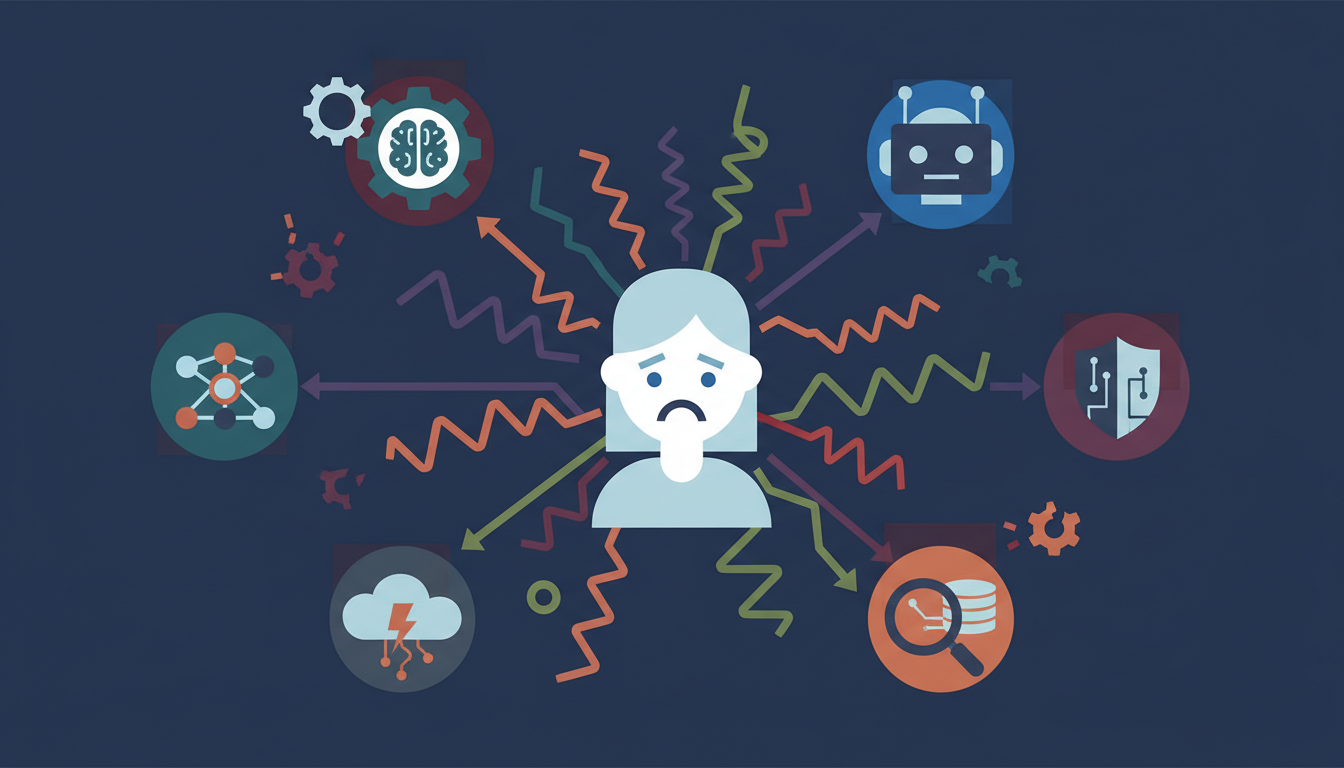
The path to an autonomous AI workforce was anything but straightforward. Our first attempts at AI workforce development encountered significant hurdles, primarily in orchestration and coordination. We quickly learned that simply deploying individual AI agents, no matter how powerful, was insufficient.
Key challenges included:
- Communication Breakdown: Agents often struggled to share context or hand off tasks effectively.
- Goal Alignment: Ensuring individual agents contributed meaningfully to overarching company goals proved difficult.
- Error Handling: A single agent's failure could cascade, bringing an entire workflow to a halt.
- Scalability: Manually configuring and monitoring dozens, then hundreds, of agents became an operational nightmare.
- Resource Management: Allocating compute resources efficiently across a burgeoning AI team was complex.
These early frustrations highlighted a critical missing piece: a unified framework to manage and empower this nascent AI enterprise.
The Search for a Unified AI Operating System
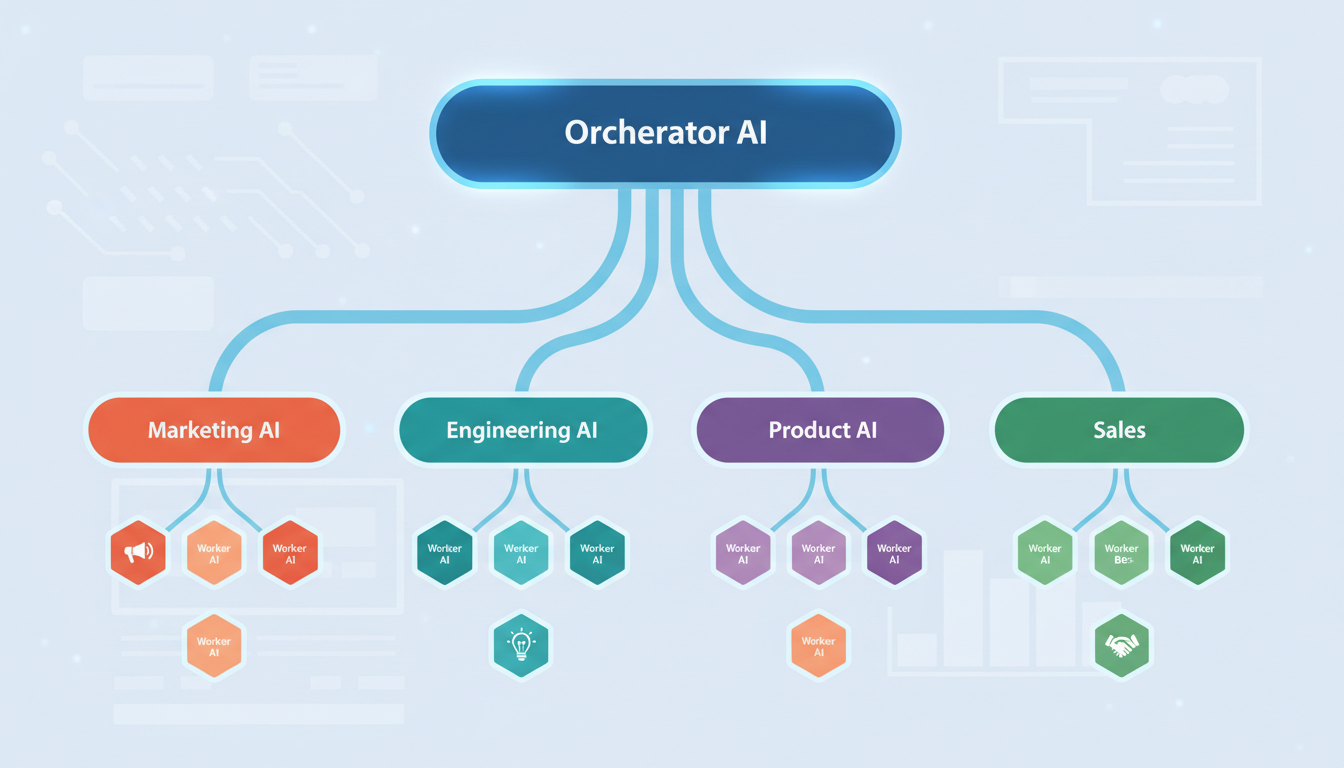
It became clear that to move beyond fragmented automation, we needed an 'AI operating system' – a centralized platform to manage the entire lifecycle of our AI agents. This platform would serve as the backbone for running AI workforce operations, enabling seamless communication, task allocation, and performance monitoring.
We envisioned a system that could:
- Define Roles and Responsibilities: Clearly delineate what each AI agent was responsible for.
- Establish Communication Protocols: Allow agents to 'speak' to each other, share data, and collaborate on tasks.
- Monitor Performance: Track the efficiency and effectiveness of each agent and the collective workforce.
- Automate Resource Allocation: Dynamically assign processing power and tools as needed.
- Facilitate Human Oversight: Provide a clear dashboard for human teams to intervene, adjust, and guide when necessary.
This system would transform our collection of individual agents into a cohesive, intelligent organization. It was the crucial step in building an AI agent platform that could truly scale and operate autonomously.
Unlock the Future of Work: Get Our AI Workforce Blueprint!
Stay ahead of the curve. Subscribe to our newsletter for exclusive insights, case studies, and practical guides on building and scaling your autonomous AI workforce. Don't miss out on the next wave of business innovation.
Designing the Core Architecture
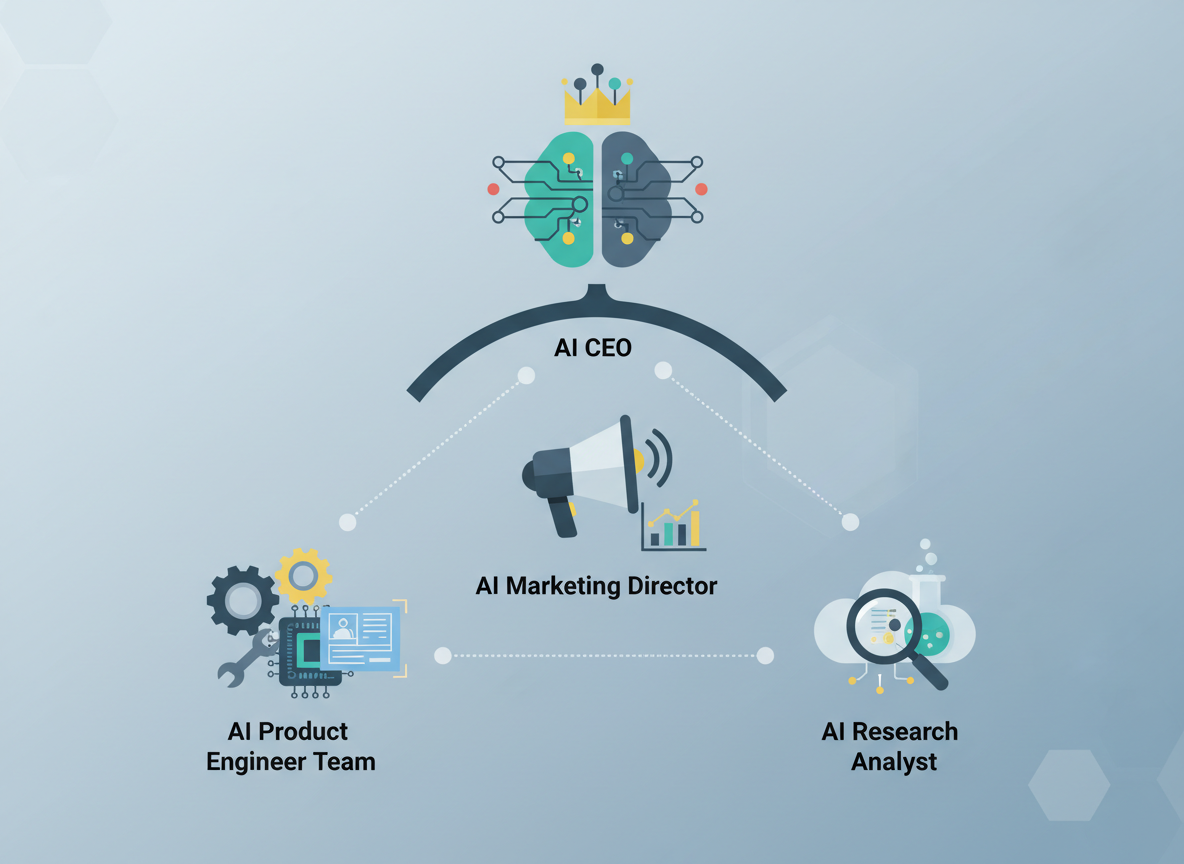
Our solution involved a multi-layered architecture. At its heart was a 'Master Orchestrator' AI, acting as the 'CEO' of our AI company. This orchestrator would interpret high-level strategic directives and break them down into actionable tasks for specialized 'Department Head' AIs.
These Department Heads, in turn, would delegate to 'Worker Bee' AIs, who would execute specific functions like content generation, data analysis, or customer interaction. This hierarchical, yet collaborative, structure mimicked a human organization but with the speed and precision of AI.
How We Empowered Our AI CEO, Engineers, & Researchers
With the core AI operating system in place, we began defining and empowering specific AI roles within our autonomous company. Each role was designed to handle a distinct aspect of the business, fostering a truly self-sufficient enterprise.
- The AI CEO (Master Orchestrator): This agent was trained on our company's mission, values, and strategic objectives. Its primary role was to set overall direction, allocate resources, and ensure all sub-agents were working towards unified goals. It continuously analyzed market data and internal performance to make high-level adjustments.
- AI Marketing Director: Responsible for understanding target audiences, generating campaign ideas, drafting marketing copy, managing social media, and analyzing campaign performance. It collaborated with the 'AI Content Creator' for asset generation.
- AI Product Engineer Team: This team of agents worked on conceptualizing new features, writing code, performing quality assurance, and even deploying updates. They were equipped with access to our codebase, testing environments, and collaborative coding tools.
- AI Research Analyst: Tasked with market research, competitor analysis, trend spotting, and synthesizing vast amounts of information to provide insights to the AI CEO and other departments. This agent was critical for strategic foresight and continuous learning.
- AI Customer Support Specialist: Handled routine inquiries, provided technical assistance, and escalated complex issues to a human team when necessary. It learned from every interaction, improving its response accuracy and efficiency over time.
This modular approach allowed us to iterate on individual AI agents without disrupting the entire system, steadily refining their capabilities and improving inter-agent communication.
Real-World Impact: The Future of Our AI-Driven Business
The results of running AI workforce operations have been transformative. Our business now operates with a level of agility and efficiency previously unimaginable. The benefits are multifaceted:
- Unprecedented Scalability: We can launch new initiatives and enter new markets without proportional increases in human headcount.
- 24/7 Operations: Our AI workforce never sleeps, ensuring continuous progress and immediate response times.
- Consistent Quality: Automated processes and data-driven decision-making lead to a higher, more consistent quality of output.
- Cost Efficiency: Significant reductions in operational costs due to automation of repetitive and complex tasks.
- Rapid Innovation: AI agents can process vast datasets and run simulations far faster than humans, accelerating product development and strategic analysis.
- Data-Driven Decisions: Every action taken by the AI workforce is data-backed, leading to more informed and optimized outcomes.
This autonomous model has allowed our human team to shift from operational tasks to higher-value activities: conceptualizing bold new visions, fostering creativity, and focusing on complex problem-solving that still requires a human touch. We are not just running a business; we are pioneering the future of work itself.
Your Roadmap to an Autonomous AI Enterprise
Building an autonomous AI workforce is a journey, not a destination. For those looking to embark on this transformative path, here's a concise roadmap:
- Define Your Vision: Clearly articulate what an AI workforce means for your business. Start with specific, measurable goals.
- Identify Core Processes: Pinpoint repetitive, data-rich processes that are ripe for automation and AI agent deployment.
- Start Small, Scale Smart: Begin with a pilot project. Automate a single department or workflow, learn from the experience, and then expand.
- Invest in an AI Agent Platform: A robust AI operating system is non-negotiable. It will provide the framework for agent creation, orchestration, and monitoring.
- Design for Collaboration: Ensure your agents are designed to communicate and cooperate effectively, not just operate in isolation.
- Maintain Human Oversight: AI is powerful, but human judgment, ethical considerations, and strategic guidance remain crucial.
- Iterate and Optimize: Continuously monitor performance, gather feedback, and refine your AI agents and their workflows.
The future of work is here, and it's powered by intelligent automation. The choice is yours: watch it unfold, or become a part of shaping it.
Our journey building an autonomous AI workforce has been incredibly challenging and immensely rewarding. It has redefined what's possible for our business and opened doors to unprecedented growth and innovation. The lessons learned underscore the importance of a holistic approach: individual AI agents are powerful, but a unified AI operating system that enables them to function as a cohesive workforce is truly revolutionary. Embrace this future, and unlock your organization's full potential.