How to Slash Your AI Operational Costs Without Sacrificing Performance
Artificial Intelligence is no longer a futuristic concept; it's a cornerstone of modern business innovation. From automating customer service to powering complex predictive analytics, AI solutions are driving unprecedented growth. However, the true cost of running these powerful systems often extends beyond initial development, leading to significant AI operational costs that can erode profitability.
Many organizations find themselves grappling with ballooning infrastructure bills, complex MLOps overhead, and the constant need for specialized talent to maintain their AI ecosystems. The good news is that reducing these expenses doesn't have to mean compromising on performance or functionality. This guide will walk you through actionable strategies, from optimizing your existing infrastructure to leveraging advanced managed AI services, to achieve significant cost savings and sustainable growth.
To effectively reduce AI operational costs, organizations must implement comprehensive infrastructure optimization, adopt efficient model deployment practices, and consider managed AI platforms that abstract away much of the underlying complexity and expense.
Understanding the True Costs of AI Operations
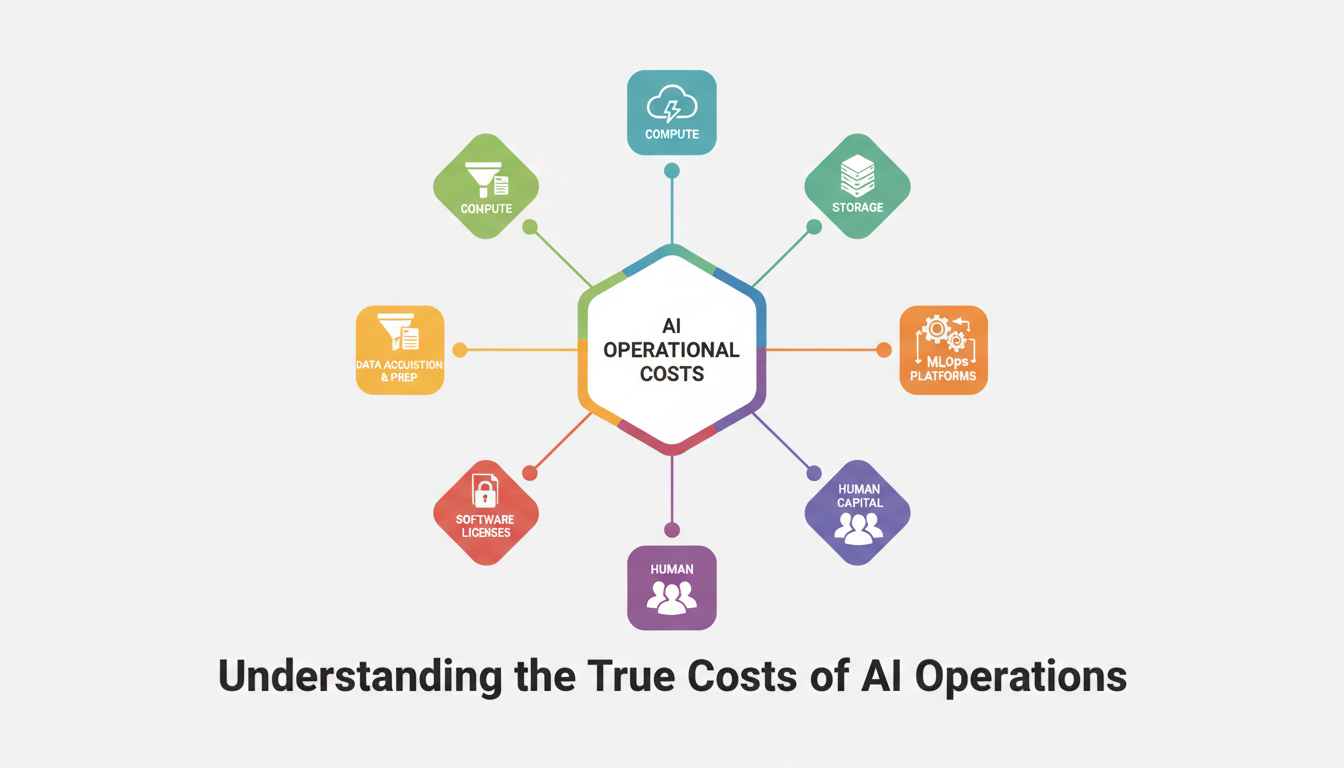
Before you can cut costs, you need a clear picture of where your money is going. AI operational costs are multifaceted and often include direct infrastructure expenses as well as indirect overheads. Identifying these components is the first step towards effective optimization.
Here's a breakdown of common areas contributing to high AI operational costs:
- Compute Resources: This is often the largest expense, covering GPUs, CPUs, TPUs, and specialized accelerators used for model training, inference, and data processing. Unoptimized resource allocation or idle compute can lead to significant waste.
- Data Storage and Transfer: AI models are data-hungry. Storing vast datasets, data lakes, model checkpoints, and inference results incurs costs. Data ingress and egress charges, especially across different cloud regions or to on-premises systems, can also add up.
- MLOps Tools and Infrastructure: Implementing and maintaining robust Machine Learning Operations (MLOps) pipelines requires significant investment. This includes tools for data versioning, model tracking, experiment management, deployment automation, monitoring, and retraining infrastructure.
- Software Licenses and Dependencies: Specialized AI frameworks, libraries, and commercial software tools often come with licensing fees that contribute to recurring operational costs.
- Human Capital: The cost of skilled data scientists, ML engineers, DevOps specialists, and data annotators is substantial. Managing and maintaining complex AI infrastructure requires a dedicated and highly compensated team.
- Energy Consumption: While often overlooked, the power consumption of extensive compute resources can be a significant environmental and financial cost, particularly for large-scale operations.
- Security and Compliance: Ensuring the security of sensitive data and models, alongside meeting regulatory compliance standards, adds layers of tools, processes, and personnel costs.
Many of these costs are not immediately obvious and can become 'shadow IT' expenses or surprise charges if not properly monitored and managed.
Strategies for Optimizing AI Infrastructure Spending
Once you've identified your cost centers, you can implement targeted strategies to optimize your AI infrastructure spending. These approaches focus on efficiency, resource management, and smarter deployment.
### Resource Optimization and Management
Effective management of your compute resources is paramount. Many AI workloads are bursty or seasonal, meaning static provisioning often leads to underutilized hardware.
- Dynamic Scaling: Implement auto-scaling mechanisms for both training and inference workloads. This ensures that resources are provisioned only when needed and scaled down during idle periods. Kubernetes and serverless functions are excellent tools for this.
- Right-Sizing Instances: Continuously evaluate your instance types. Using overly powerful or memory-rich machines for tasks that don't require them is a common source of waste. Leverage cloud provider monitoring tools to identify optimal configurations.
- Spot Instances and Reserved Instances: For fault-tolerant training jobs or non-critical batch processing, utilize cheaper spot instances. For stable, long-running inference services, reserved instances or savings plans can offer significant discounts over on-demand pricing.
- Containerization: Packaging your AI applications in containers (e.g., Docker) allows for consistent environments and more efficient resource utilization across different deployment targets.
### Model Efficiency and Performance Tuning
The models themselves can be a source of high operational costs, especially during inference.
- Model Quantization and Pruning: Reduce model size and computational requirements by techniques like quantization (using lower precision numbers) and pruning (removing redundant connections) without significantly impacting accuracy.
- Knowledge Distillation: Train smaller, faster 'student' models to mimic the performance of larger 'teacher' models, significantly cutting inference costs.
- Optimized Frameworks and Libraries: Use highly optimized versions of AI frameworks (e.g., TensorFlow Lite, ONNX Runtime) specifically designed for efficient deployment and inference.
- Batching and Throughput Optimization: Group inference requests into batches to maximize GPU utilization, especially for real-time services. Optimizing model serving architecture for higher throughput reduces latency and cost per inference.
### Smart Data Management
Data is fundamental to AI, but its management can be costly.
- Data Lifecycle Management: Implement policies to move infrequently accessed data to cheaper storage tiers (e.g., cold storage, archival). Delete or archive outdated datasets.
- Data Deduplication and Compression: Reduce storage footprints by eliminating redundant data and applying efficient compression algorithms.
- Edge AI Deployment: For latency-sensitive applications, consider performing inference at the edge rather than constantly sending data to and from the cloud, reducing data transfer costs and improving responsiveness.
The Financial Benefits of Managed AI Platforms
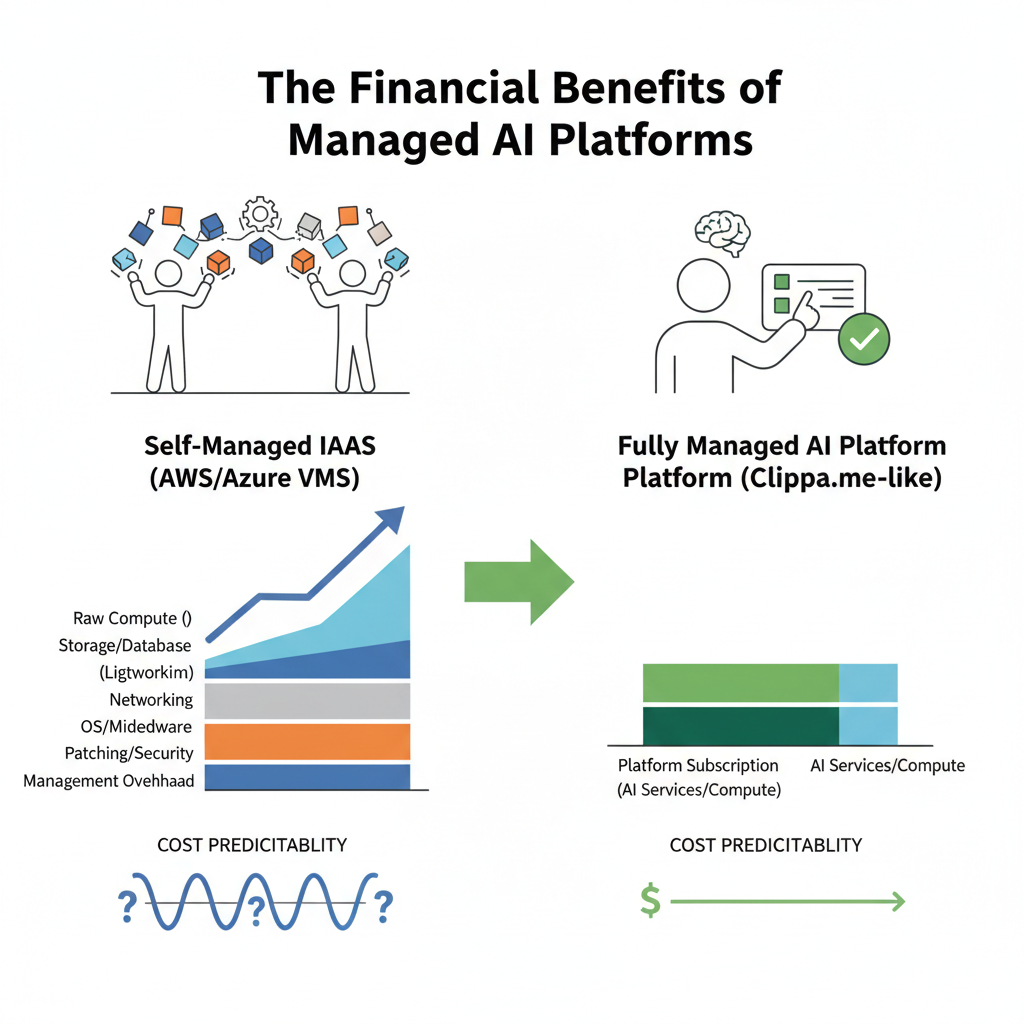
While granular control over infrastructure on IaaS platforms like AWS or Azure offers flexibility, it often comes with a steep learning curve, significant management overhead, and unexpected costs. This is where managed AI services shine, offering a compelling alternative for organizations focused on reducing AI operational costs.
Managed AI platforms abstract away the complexities of underlying infrastructure, MLOps tooling, and resource orchestration. Instead of dedicating valuable engineering time to provisioning servers, patching operating systems, or configuring Kubernetes clusters, your team can focus purely on model development and business logic. This shift provides several profound financial benefits:
- Reduced Human Capital Costs: Less need for specialized DevOps and MLOps engineers. The platform handles the heavy lifting of infrastructure management, monitoring, and scaling.
- Predictable Cost Structures: Many managed platforms offer clear, often consumption-based pricing models, making it easier to forecast and budget for AI operations. This contrasts sharply with the often-complex, variable billing of raw IaaS, where small misconfigurations can lead to significant overspending.
- Optimized Resource Utilization: Managed platforms are designed to be inherently efficient. They often employ advanced auto-scaling, dynamic resource allocation, and intelligent scheduling to ensure that you only pay for the compute you actually use, minimizing idle time and waste that is common in self-managed environments.
- Faster Time-to-Value: By simplifying deployment and monitoring, managed services allow you to bring AI models into production faster. This accelerates the realization of business value and reduces the opportunity cost of lengthy development cycles.
- Built-in MLOps Best Practices: These platforms often come with integrated MLOps functionalities, such as experiment tracking, model versioning, and continuous integration/continuous deployment (CI/CD) pipelines. This not only streamlines operations but also helps prevent costly errors and regressions.
- Reduced Risk and Maintenance: The platform vendor is responsible for security patches, infrastructure upgrades, and ensuring high availability, offloading these critical and often expensive tasks from your team.
In essence, while IaaS provides the building blocks, managed AI platforms provide the fully furnished, optimized apartment, significantly lowering the total cost of ownership for AI initiatives, especially for companies prioritizing speed and efficiency over deep infrastructure customization.
Preventing Cost Overruns in AI Development and Deployment
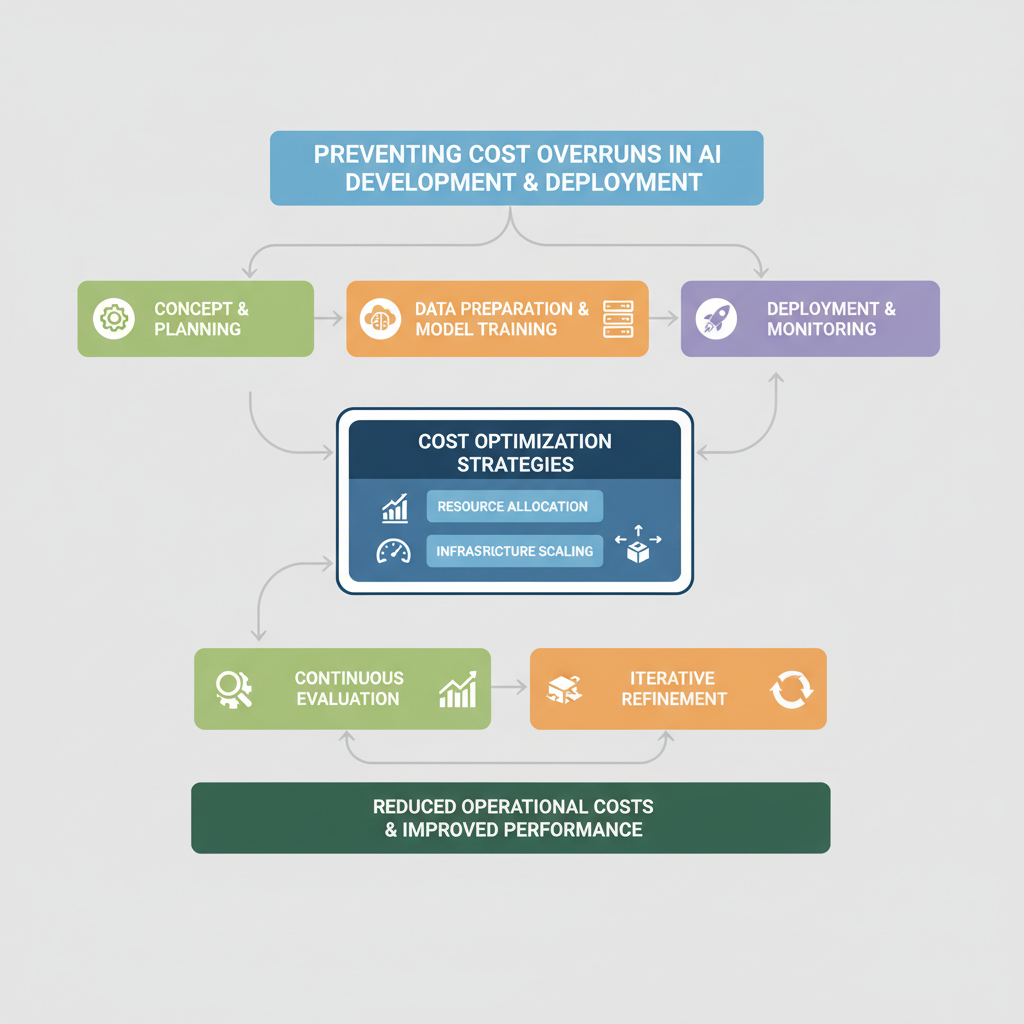
Beyond infrastructure optimization, implementing robust practices throughout the AI lifecycle can proactively prevent cost overruns.
### Proactive Cost Monitoring and Governance
Establishing a strong financial governance framework for your AI projects is critical.
- Budgeting and Forecasting: Accurately estimate resource needs and associated costs at the project outset. Use historical data to refine future forecasts.
- Real-time Cost Dashboards: Implement tools to monitor cloud spend and resource usage in real-time. Set up alerts for unexpected spikes or deviations from budget.
- Cost Attribution: Tag resources effectively to attribute costs to specific projects, teams, or business units. This fosters accountability and helps identify areas for improvement.
### Efficient Experimentation and Iteration
AI development is iterative, but unmanaged experimentation can be a major cost driver.
- Experiment Tracking: Use MLOps tools to log and compare experiment results, hyperparameters, and resource usage. This prevents redundant experiments and helps identify the most cost-effective training approaches.
- Data Subset Training: For initial model development and hyperparameter tuning, train on smaller, representative subsets of your data. Scale up to full datasets only when necessary.
- Early Stopping: Implement early stopping criteria during model training to prevent overfitting and avoid unnecessary compute cycles once performance plateaus.
### Continuous Optimization Post-Deployment
Deployment isn't the end of the cost optimization journey.
- Performance Monitoring: Continuously monitor model performance and resource consumption in production. Look for opportunities to switch to smaller models, optimize serving infrastructure, or reduce inference frequency.
- Retraining Strategies: Develop efficient retraining strategies that only trigger when model drift is detected or new, valuable data becomes available, avoiding unnecessary and costly full retraining cycles.
- Decommissioning Idle Resources: Regularly audit your infrastructure to identify and shut down idle or unused AI services, experiments, and data pipelines.
Unlock Greater AI Efficiency: Download Our Comprehensive Cost Optimization Checklist
Don't let hidden expenses derail your AI initiatives. Get our expert checklist to identify cost-saving opportunities across your AI infrastructure, MLOps, and model deployment strategies. Practical steps to reduce spending and maximize ROI.
Achieving Cost Efficiency with Clippa.me's Managed Solution
For companies looking to scale their AI initiatives without the crushing burden of rising AI operational costs, Clippa.me offers a purpose-built, fully managed solution. Our platform is engineered from the ground up to address the core challenges of cost, complexity, and performance in AI operations.
Clippa.me's approach to cost reduction is multifaceted:
- Eliminating Server Management Overhead: Our managed platform completely abstracts away server provisioning, patching, and maintenance. This means you eliminate the need for dedicated infrastructure engineers to manage your AI backend, redirecting valuable talent to core AI innovation.
- Optimized Resource Allocation: Clippa.me employs intelligent, dynamic resource allocation and auto-scaling tailored specifically for AI workloads. Whether it's bursty training jobs or consistent inference serving, our platform ensures you only consume—and pay for—the precise compute resources required at any given moment. This drastically reduces idle resource waste, a common problem in self-managed cloud environments.
- Streamlined MLOps: We provide integrated MLOps capabilities that simplify everything from data versioning and experiment tracking to model deployment and monitoring. By automating these complex workflows, Clippa.me prevents costly manual errors and accelerates your development cycles, translating directly into reduced operational expenses.
- Predictable Pricing: Our transparent, usage-based pricing model removes the guesswork associated with complex cloud bills. You gain clarity and predictability over your AI operational costs, allowing for more accurate budgeting and financial planning.
- Focus on Innovation, Not Infrastructure: By handling the operational complexities, Clippa.me empowers your AI team to focus on what they do best: building, training, and deploying innovative AI models that drive business value. This efficiency in human capital utilization is one of the most significant, yet often overlooked, cost savings.
With Clippa.me, you're not just getting infrastructure; you're getting an optimized, end-to-end environment designed to make your AI operations exceptionally cost-effective and high-performing. It's the professional, streamlined approach to scaling your AI agents without the hidden costs and complexities of building everything from scratch.
Controlling AI operational costs is no longer a luxury; it's a necessity for sustainable growth in the AI-driven era. By understanding the true components of your AI spend, strategically optimizing your infrastructure and models, and leveraging the power of managed AI platforms, you can achieve significant financial efficiencies.
The journey to cost-effective AI operations involves a commitment to continuous monitoring, smart resource management, and embracing solutions that simplify complexity. Clippa.me stands ready to be your partner in this journey, providing a robust, managed platform that ensures your AI investments deliver maximum value without breaking the bank. Start optimizing your AI operations today and unlock your full potential.